
St. Augustine · Florida
St. Augustine
Florida · United States
Spanish fortifications, a colonial town plan, Gilded Age ambition and a working lighthouse, layered into one historic core.
St. Augustine's history is told through distinct eras and powers rather than a single storyline: the Spanish coquina walls of Castillo de San Marcos and the more remote Fort Matanzas, the earliest surviving European colonial town plan at its historic core, Henry Flagler's Gilded Age Hotel Ponce de Leon, and the working 1874 St. Augustine Lighthouse.
DISCOVER ST. AUGUSTINE
A historic core layered across Spanish, colonial and Gilded Age eras.
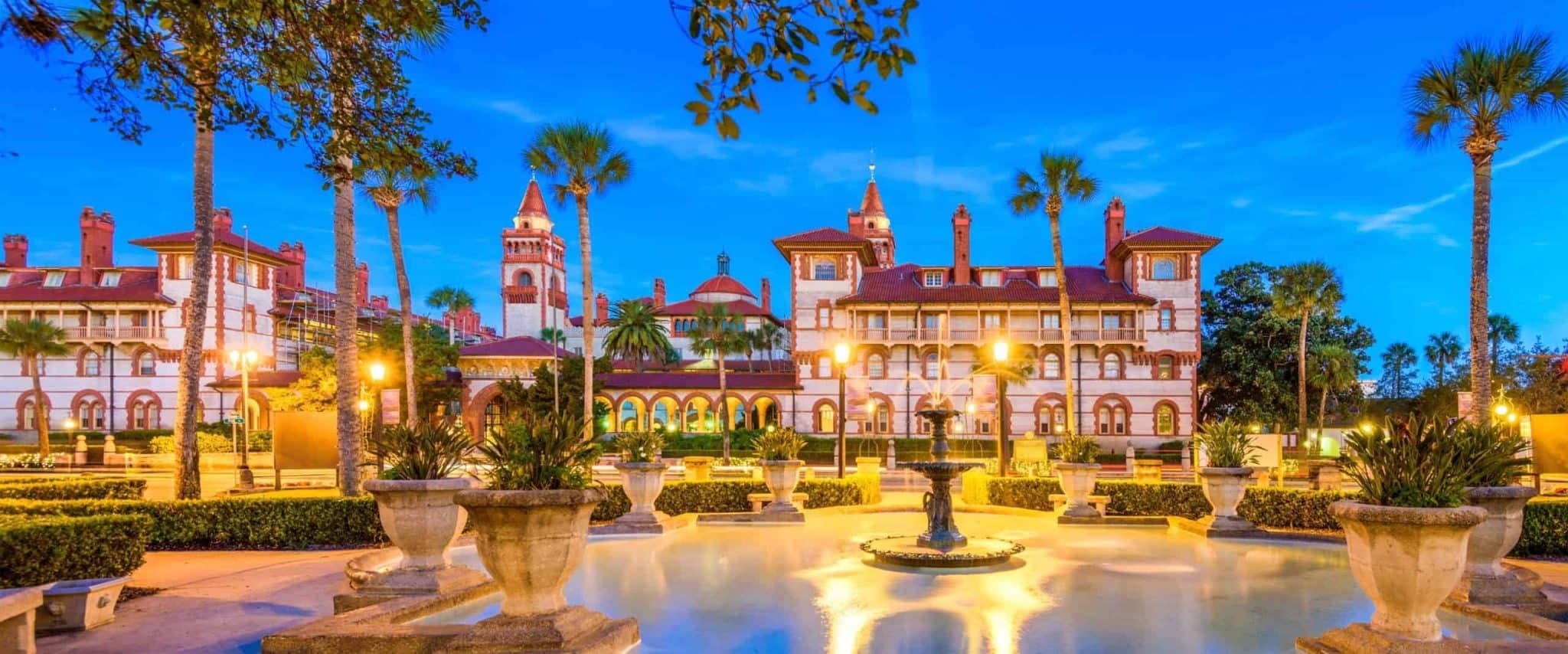
The St. Augustine Town Plan Historic District anchors the city's structure as the nation's earliest surviving European colonial town plan, its Spanish street pattern and central Plaza de la Constitución still organizing the old city core; the streets remain active public space, with individual museums, churches and historic properties setting their own access rules. That Spanish era is defended in coquina at Castillo de San Marcos National Monument, the oldest masonry fortification in the continental United States, built by Spain and central to more than four centuries of the city's contested history. A second, more remote fortification extends that same story: Fort Matanzas National Monument, a small 1740s Spanish watchtower on Rattlesnake Island built to guard St. Augustine's southern inlet after a 1742 British siege attempt, reached only by a short National Park Service ferry. Centuries later, a very different power reshaped part of the city: Henry Flagler's opulent 1888 Hotel Ponce de Leon, a Spanish Renaissance Gilded Age masterpiece, now houses Flagler College as one of the finest surviving examples of Gilded Age resort architecture in the country — an active campus rather than a static museum. The city's maritime layer is held at the St. Augustine Lighthouse & Maritime Museum, a working 1874 lighthouse interpreting the nation's oldest port through its keeper's house, archaeology and coastal navigation history, with a 219-step tower climb for those able to make it. Taken together, these five places show a city shaped by successive eras and uses — Spanish colonial power, contested military history, a Gilded Age reinvention and a working maritime institution — rather than a single superlative.
Four Centuries, Several Powers, One Historic Core
Spanish Fortifications · Gilded Age Ambition · Maritime Navigation
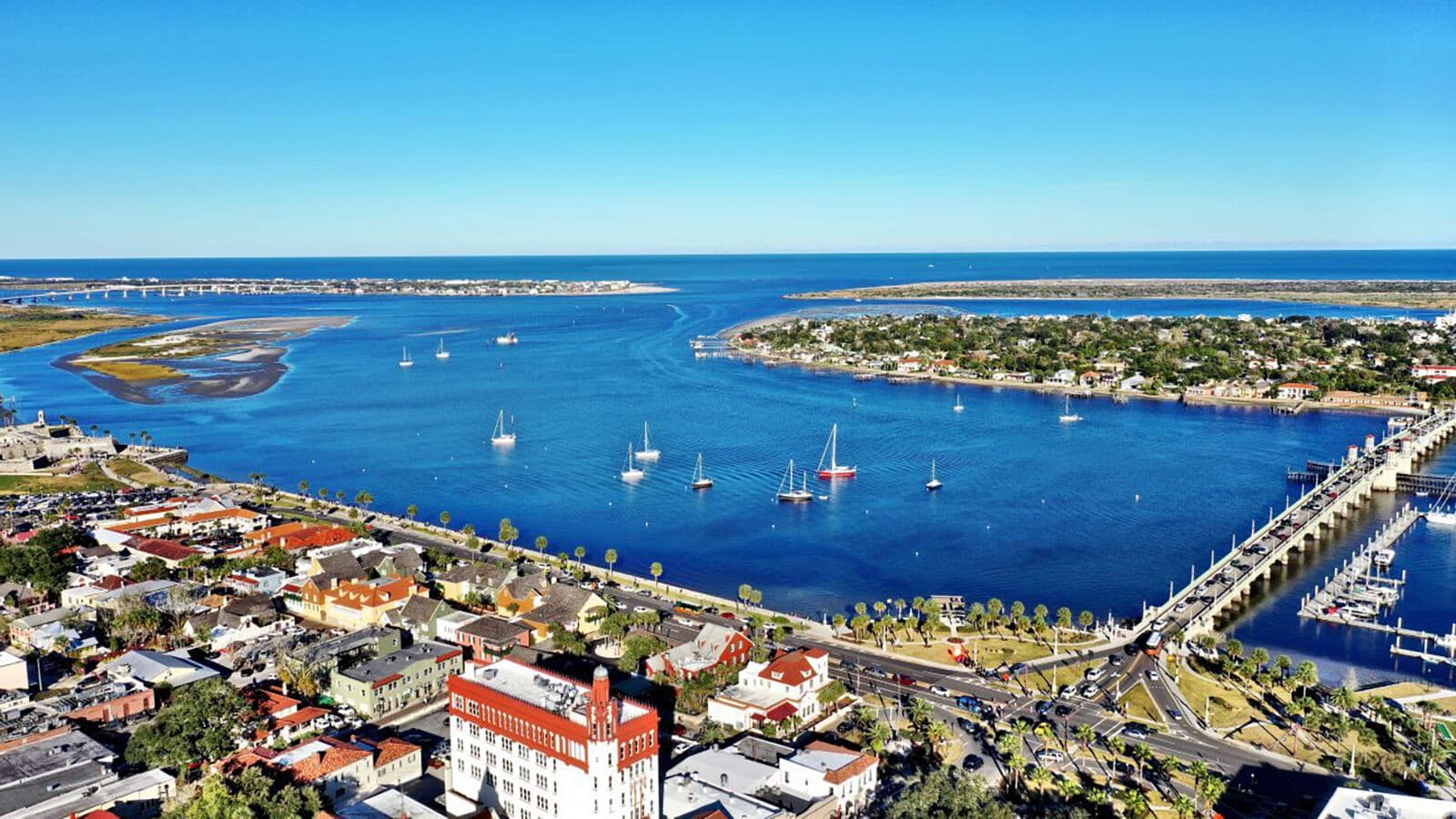
St. Augustine is not one story of 'the oldest city' — it is Spanish fortifications, a colonial town plan, Gilded Age ambition and a working lighthouse, each layer still visible.
The Spanish-era Town Plan Historic District, Castillo de San Marcos and Fort Matanzas hold the city's colonial and military history; Flagler College's Gilded Age Hotel Ponce de Leon marks a much later reinvention; and the St. Augustine Lighthouse & Maritime Museum adds a working maritime layer — four distinct eras and powers within one historic core.
Journey Possibility
Walk the Spanish street pattern and Plaza de la Constitución at the St. Augustine Town Plan Historic District, tour the coquina walls of Castillo de San Marcos, take the ferry out to the more remote Fort Matanzas, then trace two later layers of the city's history at Flagler College's Gilded Age Hotel Ponce de Leon and the 1874 St. Augustine Lighthouse & Maritime Museum.